








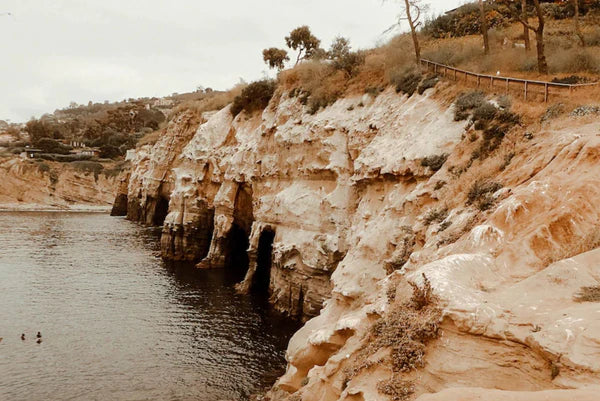
Long before La Jolla became known for its sea caves, wildlife, and coastal scenery, the land was home to the Kumeyaay people, the Indigenous inhabitants of what is now San Diego County and northern Baja California.
For thousands of years, the Kumeyaay lived along this coastline, developing a deep understanding of the region’s natural landscapes, seasonal cycles, and marine ecosystems. Their history represents the earliest known human presence in the La Jolla area.
Kumeyaay Territory
Their territory stretched from approximately Oceanside in the north to Ensenada in the south, and inland toward the mountains and desert regions east of San Diego. They were prominent in Torrey Pines State Natural Reserve, and Kumeyaay artifacts can still be seen in the reserve’s visitor center.
Archaeological evidence suggests that Indigenous communities lived in this region for at least 12,000 years, making the Kumeyaay one of the longest continuous cultural presences along the Southern California coast.
The Kumeyaay consisted of two closely related groups separated by the San Diego River:
-
Ipai – communities located north of the river
-
Tipai – communities located south of the river
While the two groups shared many cultural traditions, scholars believe they may have spoken slightly different dialects of the Kumeyaay language, although that’s not widely agreed upon.
The Kumeyaay Name for La Jolla
The Kumeyaay referred to the La Jolla area as “Kulaaxuuy.”
The word is commonly translated as “Land of Holes.”
While the exact meaning is uncertain, historians believe the name may reference the dramatic sea caves carved into the sandstone cliffs along the La Jolla coastline, which have long been one of the area’s most distinctive natural features.
These caves, along with the surrounding kelp forests and marine life, would have been important landmarks for coastal communities.
Learn More About the Seven Sea Caves →
Kumeyaay Daily Life and Survival
The Kumeyaay lived in close relationship with the land and sea, using a wide variety of resources from the surrounding environment.
Hunting and gathering were essential parts of daily life. Kumeyaay hunters used bows, arrows, and stone tools to hunt animals such as:
-
rabbits
-
quail
-
deer
-
antelope
Fishing also played an important role along the coast. The Kumeyaay caught fish using bone hooks, nets, and spears, and collected shellfish and other marine foods from the shoreline.
Women were highly skilled artisans and created many of the essential items used in daily life. They produced coiled baskets, pottery, clothing, and woven materials used for storage and shelter.
Basket weaving in particular was a highly developed craft and remains one of the most celebrated artistic traditions of Kumeyaay culture.
Land Stewardship and Environmental Knowledge
The Kumeyaay practiced sophisticated methods of environmental management long before modern conservation practices existed.
These techniques included:
-
controlled burns to manage vegetation and prevent large wildfires
-
erosion control to protect soil and waterways
-
water management systems
-
plant cultivation and husbandry
These practices helped maintain healthy ecosystems and supported sustainable food sources across the region.
Many modern land management strategies now recognize the value of these Indigenous environmental practices.
Kumeyaay History in the La Jolla Area
The Kumeyaay lived throughout the San Diego region, including areas that are now popular coastal destinations.
Evidence of Kumeyaay history can still be found throughout the region today. For example, artifacts and exhibits related to Kumeyaay culture are displayed at the Torrey Pines State Natural Reserve visitor center, where visitors can learn about the Indigenous communities that once lived along the nearby cliffs and canyons.
These sites offer a glimpse into the deep history of the coastline long before modern development.
Kumeyaay Communities Today
Today, the Kumeyaay remain an active and thriving community.
There are multiple federally recognized Kumeyaay tribes located throughout San Diego County as well as communities in Baja California, Mexico. These tribes continue to preserve their cultural traditions, language, and history.
The Kumeyaay remain an essential part of the cultural heritage of Southern California and the San Diego region.
Recognizing the long history of the Kumeyaay people helps provide a deeper understanding of the landscapes and ecosystems that define La Jolla and the surrounding coastline today.