



The Seven Sea Caves of La Jolla are among the most remarkable coastal formations in Southern California. Carved into the sandstone cliffs between La Jolla Cove and La Jolla Shores, these caves were formed over millions of years by the relentless erosion of the Pacific Ocean.
Today the caves sit along the edge of the La Jolla Ecological Reserve, one of California’s most protected marine environments. The dramatic cliffs, underwater kelp forests, and rich marine life make this area one of the most unique coastal landscapes in the state.
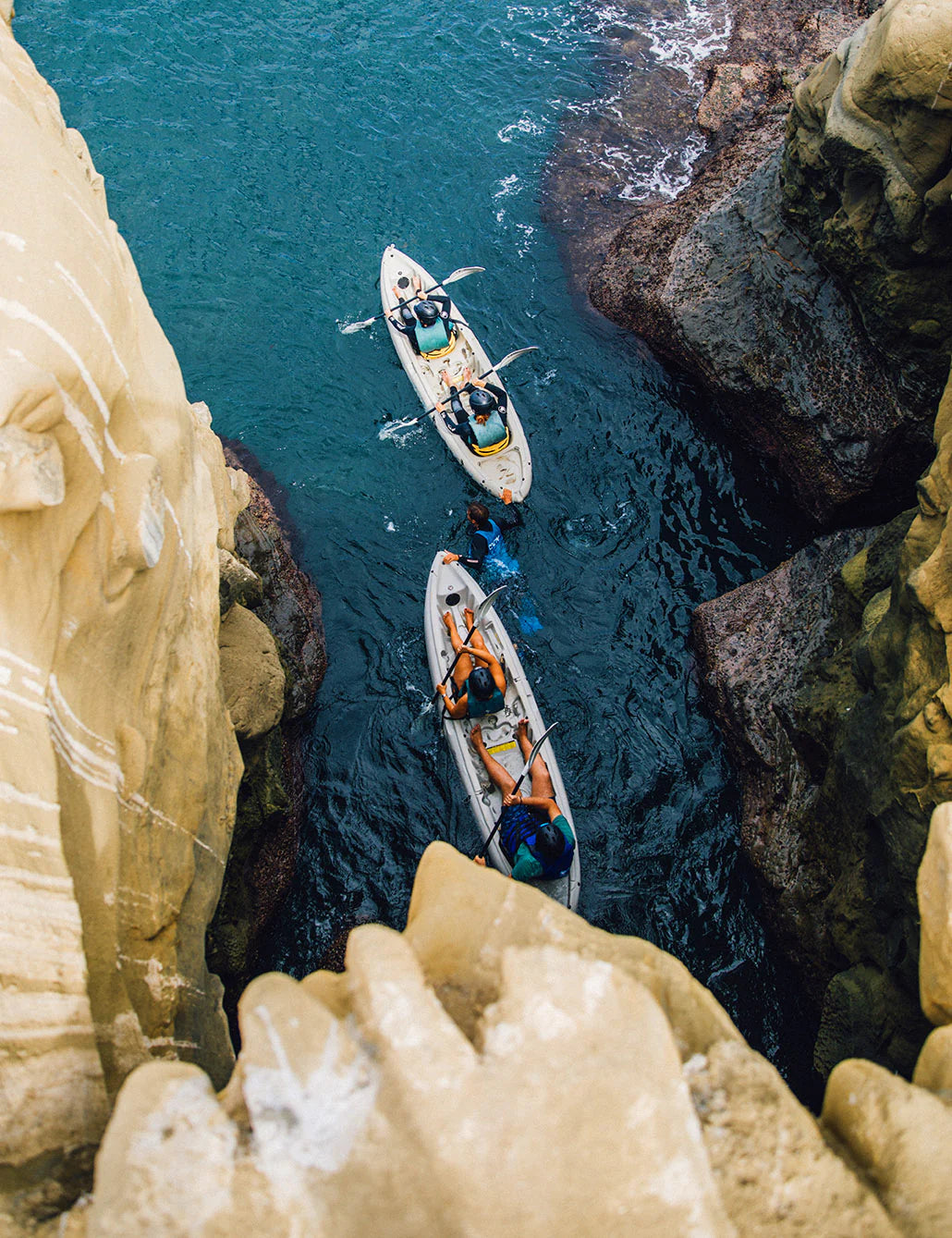
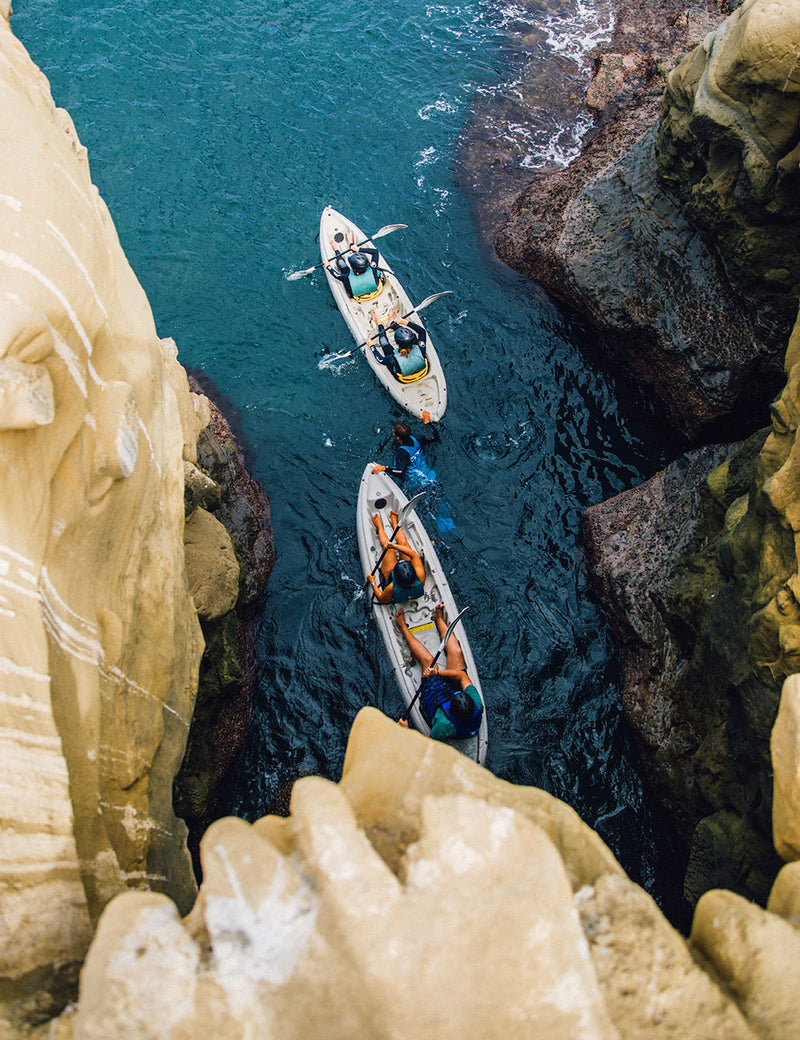
Most visitors see the caves from the water while kayaking, snorkeling, or paddle boarding through the reserve. Others view the cliffs and cave entrances from coastal viewpoints along La Jolla Cove.
How the La Jolla Sea Caves Formed
The La Jolla coastline is made of sandstone cliffs that date back roughly 75 million years to the Cretaceous Period, part of what geologists call the Point Loma Formation.
Over time, waves from the Pacific Ocean carved cracks and fissures into these cliffs. As water repeatedly forced its way into these openings, the rock slowly eroded, eventually forming the sea caves that exist today.
This process, known as wave erosion, can take hundreds of thousands — or even millions — of years. As erosion continues, caves may deepen, widen, or collapse entirely, which is why sea cave formations are constantly evolving.
The La Jolla cave system is considered a littoral cave system, meaning the caves form directly along a shoreline where wave action continuously shapes the rock.
The Seven Sea Caves of La Jolla
Each of the seven caves has its own unique features, entrances, and geological formations. Some are visible from shore, while others can only be seen clearly from the water.
Clam Cave
Clam Cave sits at the western edge of La Jolla Cove and is one of the most recognizable of the Seven Sea Caves. Its multiple entrances and exits allow ocean water to move freely through the cavern, creating strong currents that constantly shape the interior rock formations.
Because of its size and structure, Clam Cave is one of the caves that can be entered by kayak. Its location along the La Jolla coastline also provides some natural protection from larger swells, making it one of the more accessible caves in the system.
When conditions allow, experienced guides will safely paddle groups through this towering sea cave as part of our La Jolla Sea Cave Kayak Tours →
Sunny Jim's Cave
Sunny Jim Cave is the most famous of the La Jolla sea caves and the only cave that has both land and sea access.
The cave was originally owned by Gustav Shultz, who owned a home above the cave in the early 1900’s. In the early 1900s, he hired 2 workers to carve a 138-step tunnel from his living room floor to the back side of the cave. The project took nearly two years to complete and became one of La Jolla’s largest tourist attractions. Around 200 visitors a day would pay 50 cents to enter.
After Gustov passed away the mafia used Sunny Jim’s cave to smuggle whiskey into San Diego during prohibition era.
Visitors can still access the cave today through the Cave Store in La Jolla Cove.
Arch Cave (Arches)
Arch Cave (Arches) is the second deepest cave along the California coastline, measuring 680 feet deep.
The cave system contains multiple corridors created by centuries of erosion. At one point, two separate caves were connected by erosion, leaving a large natural arch between them — giving the cave its name.
Due to active erosion and narrow passages, the interior of the cave can be hazardous and is best viewed from the water.
Shopping Cart Cave
Shopping Cart Cave earned its unusual name because of the objects that have been found inside.
Strong underwater currents near the cave tend to collect debris and lost items. Tour guides have reported finding everything from sandals and sunglasses to cameras that drifted into the cave system.
The cave is also located near an area once known for spiny lobster populations, which historically attracted local fishermen during the limited lobster season of October to March. There are no longer any traps within the Marine Protected Area, but you can still find many traps outside the area during lobster season.
White Lady Cave
White Lady Cave in La Jolla, California, is a fascinating sea cave with a tragic backstory.
According to local legend, a young couple named Mr. and Mrs. Hathaway were married in Los Angeles in the early 1800's. After the ceremony, they traveled to the quiet and secluded coastline of La Jolla by stagecoach (this was before the railroad boom of the 1850's) for their honeymoon.
As the story goes, the beautiful bride was searching for seashells near the sea caves when the tide suddenly came in. Her newlywed husband heard a loud scream as she was swept away by the strong current.
While searching the shoreline for her, witnesses reported seeing something unusual inside one of the eastern caves. The crashing waves and white foam appeared to resemble the shape of a bride wearing a flowing white wedding dress. The calcite-coated sea anemones and swirling water inside the cave were said to resemble the wreath she had worn earlier that day.
Since then, the cave has been known as the White Lady Cave in her memory.
Little Sister Cave
Little Sister Cave sits next to White Lady Cave and is the smallest of the seven sea caves.
Its small size often makes it difficult to spot unless you know exactly where to look. The cave’s name comes from its resemblance to the larger White Lady Cave beside it. The easiest way to spot this cave is on the water, with the help of our knowledgeable tour guides.
Sea Surprize Cave
Sea Surprize Cave appears modest from the outside, but opens into 80 feet of walking passages once inside.
According to those who have ventured in, Sea Surprize has orange walls (due to rock deposits) and a pool of water deep inside the cave containing calcite-coated sea anemones.
Marine Life around the Seven Sea Caves
The caves lie within the La Jolla Underwater Park, a marine protected area that supports a diverse ecosystem.
Marine life commonly seen around the caves includes:
• California sea lions
• harbor seals
• bright orange garibaldi (California’s state fish)
• bat rays
• kelp forests filled with reef fish
• migrating dolphins and whales at certain times of year
Because the area is protected, wildlife sightings are common both above and below the water.
Learn more about marine life local to La Jolla →
Seeing the Sea Caves from the Water
While the cliffs and cave entrances can be viewed from coastal viewpoints, many visitors choose to see the caves from the best view there is: the seat of a kayak.
Kayaking, snorkeling, and paddle boarding all provide a closer look at the cave entrances and the surrounding marine environment of the ecological reserve.
If you're interested in exploring the area this way, see our guide to La Jolla water activities and tours →
Why the La Jolla Sea Caves are so Unique
The Seven Sea Caves of La Jolla combine several rare features in one location:
• ancient sandstone geology
• dramatic coastal cliffs
• marine protected waters
• abundant wildlife
• a long history tied to local exploration and tourism
Together, these elements make the La Jolla caves one of the most fascinating coastal landmarks in Southern California.
Frequently Asked Questions
What is a Sea Cave?
A sea cave is a natural cavity formed when ocean waves erode cracks and weaknesses in coastal rock. Over time, these openings grow larger until they form caves that extend into the cliffs.
How old are the La Jolla Sea Caves?
The sandstone cliffs that contain the caves date back roughly 75 million years, though the caves themselves formed much later as waves gradually carved openings into the rock.
Can you walk into the La Jolla Sea Caves?
Only Sunny Jim Cave can be accessed from land. The remaining caves are generally viewed from the water or from coastal viewpoints.